
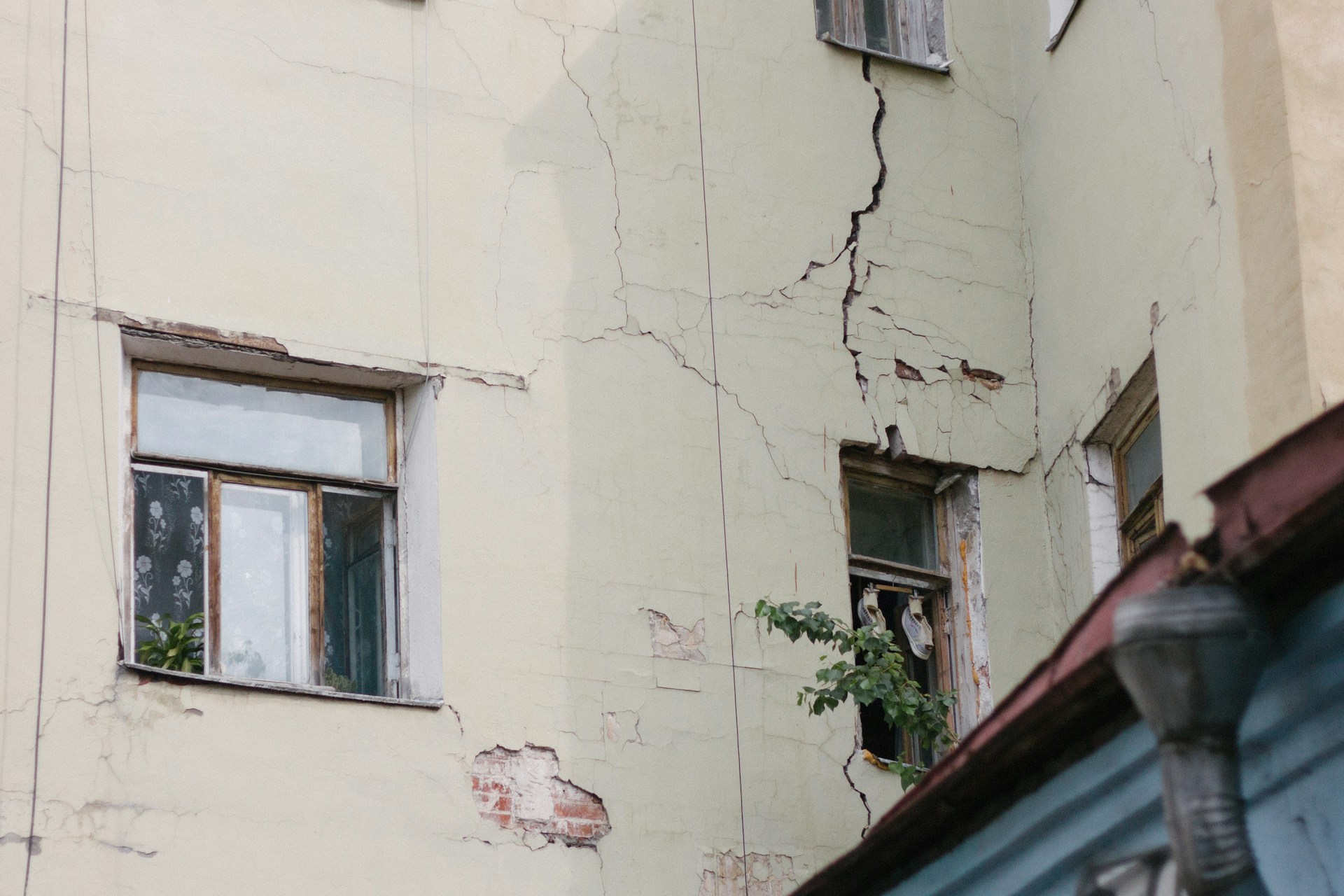
Every homeowner knows the moment of dread: spotting a new crack in a wall. The immediate concern is whether it’s harmless, everyday settlement cracks vs subsidence, the costly and terrifying structural enemy.
While minor cracking is a completely normal part of a building’s life, major movement can signal a serious, structural problem. Knowing how to differentiate between the two is vital for your peace of mind and, more importantly, for protecting your property investment.
This guide will demystify the crack, providing you with the knowledge to identify the red flag crack patterns that demand professional attention, and the minor blemishes you can safely skim over.
Understanding “Normal” Settlement
Settlement is the natural, usually harmless, movement a building undergoes. It is most common in new builds or extensions but can happen in older homes too, often in response to seasonal changes or minor soil movements.
Settlement occurs when the ground beneath the foundations compacts slightly under the weight of the structure, causing the building to “settle” into its final position.
Characteristics of Settlement Cracks:
- Size: They are typically hairline cracks (under 2mm wide) and easily covered by paint or filler.
- Direction: They often follow the lines of mortar joints or appear vertically near corners of windows and doors.
- Stability: They appear quickly, often within the first few years, and then stop growing. They do not increase in width or length over a short period of time.
These minor cracks are usually purely aesthetic and do not compromise the structural integrity of the home.
What is Subsidence?
Subsidence is the downward movement of the ground beneath a building’s foundations, which is not caused by the weight of the building itself. Unlike settlement, subsidence is an ongoing, serious process that indicates a fundamental failure in the ground support, and it is almost always progressive and damaging.
Common Causes of Subsidence in the UK:
- Soil Shrinkage: Often caused by prolonged dry spells, especially in clay-rich soils. Large trees and vegetation drawing moisture from the ground can also be a factor.
- Washing Away of Soil (Heave): Leaking drains or water pipes can saturate the subsoil, causing fine soil particles to wash away, creating voids.
- Mining Activity: In some regions, old mine workings can collapse beneath the foundations.
If diagnosed, subsidence usually requires extensive and costly structural repair, often involving underpinning.
Key Differences: Settlement Cracks vs Subsidence Cracks
The key to understanding the difference lies in the size, direction, and behaviour of the cracks.
Settlement Cracks (Normal Movement)
- Size: Typically hairline cracks (under 2mm wide). They are usually stable and easily covered with filler and paint.
- Direction/Pattern: They often run vertically or slightly diagonally, commonly following mortar joints in brickwork.
- Progression: They are non-progressive, meaning they appear early on (especially in new builds) and then stop growing.
- Associated Damage: Usually limited to aesthetic damage like peeling plaster or wallpaper.
Subsidence Cracks (Red Flags)
- Size: Cracks are significantly wider (often >3mm, the width of a £1 coin or more) and rapidly widen over time.
- Direction/Pattern: They are most often diagonal and “stepped,” running through both the brick and the mortar joints. Crucially, they are frequently widest at the top.
- Progression: They are progressive, growing noticeably longer and wider over a short period of weeks or months.
- Associated Damage: Accompanied by other issues, such as sticking doors and windows, and sloping floors, indicating structural distortion.
Red Flag Crack Patterns (The Subsidence Indicators)
If you see these tell-tale signs, it’s time to call an expert:
- Diagonal, Stepped Cracks: The most significant indicator of subsidence is a crack that runs diagonally up the wall, stepping through the brick or block work. This crack is often significantly wider at the top than at the bottom. This pattern reflects the corner of the foundation dropping away.
- External and Internal Alignment: A crack that is visible on the outside wall and can be found in the exact same location on the inside wall is a major structural concern.
- Sticky Doors and Windows: If doors and windows that previously opened and closed fine now jam, stick, or have visible gaps around the frame, it indicates that the structure of the frame has warped due to severe movement.
- Disruption of Services: Look for signs of damage to attached pipes or external fittings near the crack.
If the cracks are wider than 3mm and show signs of ongoing growth, the issue is unlikely to be simple settlement.
Next Steps: When to Call a Surveyor
You do not need to diagnose structural problems alone. If you are concerned that your property shows signs of subsidence, the next step is crucial: call a structural surveyor.
Do not simply fill the crack. Instead, monitor it:
- Crack Monitoring: Affix a small piece of clear tape or a specialised crack monitoring gauge across the crack. Date it. Check it regularly (weekly/monthly) to see if the tape breaks or the crack widens.
- Expert Diagnosis: A structural surveyor will provide an impartial, detailed assessment. They can differentiate between minor settlement cracks vs subsidence by examining the foundations, drainage, and surrounding soil conditions. They will confirm the cause and recommend a solution, whether that’s simple cosmetic repair, vegetation management, or full underpinning.
Don’t let the fear of a crack stop you from getting a full picture of your property’s condition.
Protect Your Home with Expert Advice
Minor settlement cracks vs subsidence can be a tough call for any homeowner, but understanding the size, pattern, and behaviour of the crack is your best defence. Harmless settlement remains stable and small; subsidence is wide, progressive, and diagonal.
For an accurate, professional assessment that guarantees peace of mind, trust the experts at Survey Hut.
Sharing is caring!